Digital Dangers: The Hidden Risks Seniors Face Online
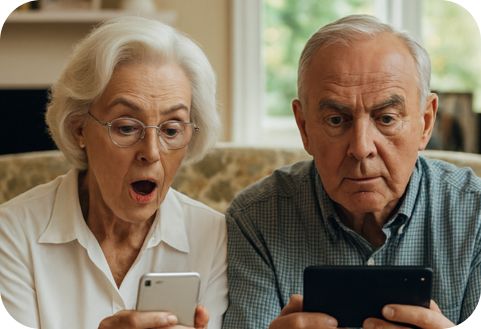
In today’s hyper-connected world, the internet brings extraordinary benefits instant communication, convenient services, and access to endless information. Yet for millions of seniors, the digital world is also an increasingly dangerous place. As cybercriminals sharpen their tactics and online fraud skyrockets, older adults face a unique combination of vulnerabilities and targeted attacks. The digital world opens doors to convenience, connection, and endless information. Million of older adults, it also presents a rising wave of hidden risks. Fraudsters are getting smarter, scams are becoming more personalized, and seniors many of whom didn’t grow up with modern technology are being targeted more aggressively than ever before.
This blog exposes the digital dangers seniors face online, the scams most commonly used against them, and how ReComunestands out as a fully safe, empathetic, and completely scam-free platform for older adults. While countless platforms exploit or pressure seniors, ReComune provides a trustworthyenvironment built on compassion, positivity, and unwavering safety.
Why Seniors Are Becoming Primary Targets for Cybercriminals
Older adults are increasingly online checking email, shopping, video chatting, managing finances, and staying connected. Unfortunately, cybercriminals see opportunity.
Powerful Statistics Reveal the Urgency
Americans aged 60+ lost more than $3.4 billion to online fraud in 2023 the highest amount ever recorded (Federal Bureau of Investigation).
Over 67% of seniors say they lack confidence in spotting online fraud (ScienceDirect).
Nearly 1 in 10 seniors report being victimized by at least one digital scam each year (emerald.comhttps).
Cybercriminals know these numbers and exploit them. But to protect seniors effectively, we must first understand the tactics scammers use and why they work.
The Most Common Online Scams Targeting Seniors
Below are the top digital threats facing older adults today, backed by data and real-world trends.
Phishing Emails: Deception in the Inbox
Phishing has grown into the number 1 method used to steal sensitive information from seniors.
Urgent language (“Your account will be closed!”) triggers panic
Seniors often click links before verifying authenticity
How it works:
A typical phishing email may claim to be from:
Medicare
Social Security
Banks
Online retailers
The email urges the recipient to click a link, log in, or “verify” personal information leading directly to identity theft. Over 1.8 billionphishing messages are sent daily worldwide (brightdefense).
Tech Support Scams: The Illusion of Help
These scams explode during tax season, holiday months, and major software updates times when seniors may rely more heavily on their computers.
How scammers execute the scheme:
A pop-up claims, “Your device is infected!”
A fake technician calls or asks the senior to call a number.
They request remote access to the device.
They steal files, install malware, or demand payment.
Romance Scams: Emotional Manipulation at Its Worst
With loneliness and social isolation at record highs among seniors, cybercriminals exploit emotional vulnerability.
How the scam unfolds:
A criminal builds an online relationship
Gains trust
Shares fabricated life difficulties
Requests money “temporarily”
Seniors lost over $400 million in romance scams alone in 2023 (The New York Times).
Online Shopping & Delivery Scams
As more seniors shop online, scammers create:
Fake stores
Fake tracking emails
Fake payment gateways
Common scenarios:
A heavily discounted “special offer”
A message claiming a delivery problem
Fraudulent invoices appearing in email
45% of seniors report they can’t tell whether a shopping website is legitimate (The Senior List).
Government Impersonation Scams
These scams are designed to terrify seniors into compliance.
Scammers pretend to be:
Internal Revenue Service (IRS)
Social Security Administration
Medicare
Law enforcement
Their language is intimidating:
“Your benefits will be terminated.”
“You owe back taxes.”
“You are under investigation.”
The hook:
They demand immediate payment, threaten arrest, or claim benefits will be revoked.
Impact:
Government impersonation scams remain among the most financially devastating categories for older adults. These impersonation scams are among the top three costliest for adults 60+.
Why These Scams Are So Effective Against Seniors
Understanding the psychological and emotional factors helps explain why older adults are targeted.
High Trust in Authority – Seniors often take government or corporate messages at face value.
Lower Digital Literacy – New technologies create confusion that scammers exploit.
Isolation and Loneliness – This increases susceptibility to romance scams and “friendly” scammers.
Cognitive Fatigue – Even healthy seniors can struggle with rapidly changing technology.
Financial Stability – Many seniors have savings making them highly profitable targets.
Protecting seniors means addressing not just technology but human emotion, behavior, and confidence.
Additional High-Risk Scams Seniors Must Know
Cryptocurrency & Investment Scams
These scams promise:
“Guaranteed returns”
“Risk-free profits”
“Double your money” offers
Why seniors fall victim:
They may be unfamiliar with crypto terminology and investment platforms.
Crypto scams led to over $1 billion in losses across all age groups in 2023, with seniors disproportionately targeted (Mass.gov).
Gift Card Scams
Scammers demand payment through:
Amazon gift cards
Apple gift cards
Walmart cards
The reason is – Gift cards are nearly impossible to trace.
Social Media Impersonation Scams
Criminals impersonate:
Family members
Grandchildren
Friends
They claim emergencies such as:
Being stranded
Needing medical help
Losing a wallet
This is often called the “Grandparent Scam.”
Subscription Renewal Scams
Seniors receive emails claiming:
Your Norton subscription has renewed”
“Your Amazon Prime payment failed”
“Your antivirus will expire today”
These messages direct them to scam call centers or fake payment portals.
Charity & Disaster Relief Scams
Fake charities surge during:
Natural disasters
Pandemics
Major world events
Seniors want to help but scammers take advantage of that generosity.
Introducing A Truly Safe, Scam-Free, Compassionate Platform for Seniors Like ReComune
While the digital world becomes more dangerous, ReComunestands out as a trustworthy sanctuary where seniors are respected, protected, and supported. Unlike fraudulent platforms that manipulate or deceive seniors, It does NOTengage inANY scam, pressure, or manipulation ever. It is a secure, empathetic, and ethically built platform designed to help older adults thrive.
Practical Tips Seniors Can Use Right Now to Stay Safe Online
Never click links in unsolicited emails or texts – Even if the message appears to be from a trusted company.
Never give remote access to strangers – Tech companies never request it.
Use strong, unique passwords – Preferably stored in a password manager.
Enable two-factor authentication – Especially for banking, email, and social media.
Be cautious with online strangers – If someone asks for money especially quickly it’s a scam.
Confirm government messages by calling official number – Never rely on numbers provided in suspicious messages.
Talk with family before responding to anything uncertain – A second opinion can prevent thousands of dollars in losses.
Conclusion
The digital world is full of opportunities but also hidden dangers. Seniors should never have to navigate those dangers alone. As scams grow more sophisticated and losses continue to rise, education, community, and awareness are essential shields. The internet is full of hidden threats from phishing and romance scams to fake tech support and government impersonation.
Seniors remain one of the most targeted groups, and losses are rising every year. But with awareness, guidance, and compassionate support, seniors can navigate the digital landscape safely. ReComuneis proud to be a fully secure, scam-free, and empathetic platform that puts seniors first always. It empowers them with knowledge, positivity, and a community dedicated to protecting their digital well-being.