

Alzheimer’s 2025: The New Horizon
ReComune
Updated on: 26 Feb 2026

Memory changes are a natural part of growing older, but not all forgetfulness is the same. Families often struggle to understand whether a senior’s behavior is simply normal aging or an early sign of cognitive decline. This uncertainty can create fear, frustration, and emotional overwhelm not only for seniors, but for loved ones who want the very best for them.
According to the National Institute on Aging, occasional forgetfulness like misplacing keys or struggling to recall a word is common in healthy aging (NIH). But when memory issues begin interfering with daily function, decision-making, or personal safety, they may indicate something deeper, such as mild cognitive impairment (MCI) or early dementia (National Institute of Health). Understanding the difference empowers families to respond with compassion, clarity, and confidence. This blog breaks down the essential differences between normal aging and serious memory loss, highlights early warning signs, and shares practical ways including technology to support senior brain health.
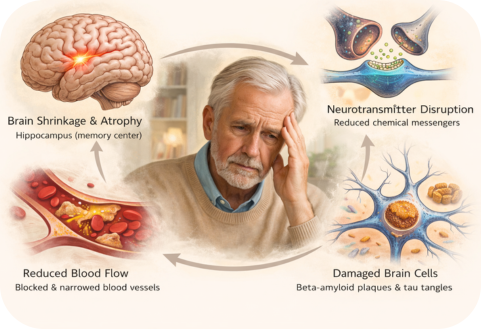
As adults age, the brain naturally undergoes structural changes. Neural communication slows, retrieval becomes less efficient, and multitasking becomes more difficult. These changes are not harmful. In fact, researchers from Harvard Medical School note that older adults often compensate with improved emotional intelligence, vocabulary depth, and reasoning ability (Harvard Health Publishing).
These changes do not disrupt daily life.
Serious memory loss is different. It affects the ability to live independently, remember important information, or participate in conversations. According to the Alzheimer’s Association, warning signs of abnormal memory decline include (Alzheimer’s Association).
These symptoms may point to conditions such as:
The earlier families notice these changes, the better the chances of managing, slowing, or treating symptoms.
| Normal Aging | Possible Cognitive Decline |
|---|---|
| Occasionally misplaces items | Frequently loses items and cannot retrace steps |
| Takes longer to recall names | Forgets names of close family or friends |
| Needs reminders for appointments | Completely forgets appointments, even with reminders |
| Maintains independence | Declines in daily functioning or safety |
| Mood remains stable | Increased anxiety, confusion, or irritability |
| Follows familiar routines well | Cannot follow familiar steps (e.g., cooking, paying bills) |
If a senior consistently struggles in the right column, it’s time for a professional cognitive evaluation.

Memory concerns aren’t just medical they’re emotional.
Seniors may feel:
Families may feel:
Understanding what’s happening and supporting seniors with empathy reduces fear and strengthens trust.
Families are in the best position to spot declining mental patterns because they see behavior changes over time.
Behavior
Daily function
Social engagement
Language
Orientation
If multiple areas are affected, it may indicate more than normal aging.

Talking about memory loss is delicate but essential.
Open dialogue reduces shame and creates an environment where seniors feel safe sharing their concerns.
Seniors thrive when they feel capable, respected, and included.
Preserving dignity is key to emotional well-being.
Technology can be a powerful ally in boosting senior memory when used properly and introduced with patience.
Research shows that cognitive stimulation, social engagement, and routine-based reminders can slow memory decline (MDPI).

This kind of technology bridges generational gaps, reduces isolation, and keeps seniors mentally active, which is shown to boost memory retention over time.

A medical evaluation is important when seniors show signs beyond normal aging.
Doctors may recommend:
Early detection leads to better management and better outcomes.
Lifestyle habits that support cognitive wellness:
Mediterranean-style diets are linked to better brain aging (Harvard Health).
Walking, stretching, and light exercise improve blood flow to the brain.
Puzzles, reading, music, or hobbies stimulate cognition.
Isolation accelerates decline connection protects the brain.
Poor sleep worsens memory and focus.
Consistency reduces confusion and stress.
With support, seniors can maintain confidence, memory function, and emotional well-being.
Understanding the difference between normal aging and serious memory loss is one of the greatest gifts families can offer their aging loved ones. When seniors feel seen, supported, and understood, their confidence grows and fear begins to fade. Memory changes do not have to signal the end of independence or joy; with early awareness, open communication, and compassionate guidance, families can help seniors navigate this stage of life with dignity and strength.
Technology, when introduced gently, also becomes a powerful ally offering reminders, stimulation, and meaningful connection that protect brain health and emotional well-being. Tools like senior-friendly conversation platforms, memory apps, and supportive digital companions provide comfort without complexity. Above all, what matters most is presence. When families stay engaged, patient, and proactive, seniors feel valued and reassured. Together, we can transform memory challenges into opportunities for closeness, resilience, and lifelong connection.