
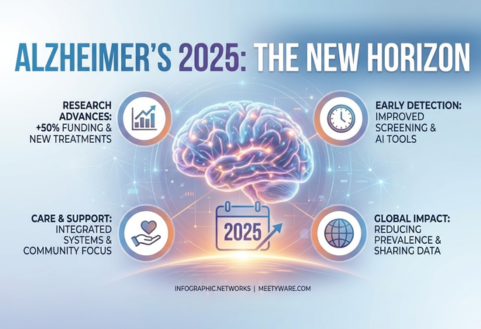
Alzheimer’s 2025: The New Horizon
ReComune
Updated on: 26 Feb 2026

As global life expectancy rises, the focus on cognitive wellness has never been more important. Seniors today are living longer, but longevity without mental clarity, emotional balance, and purpose presents new challenges. Cognitive decline is often misunderstood as inevitable, yet science shows that proactive,preventive lifestyle choices can significantly protect brain health.
According to the World Health Organization (WHO), the global population aged 60 and older will reach 2.1 billion by 2050, while dementia cases are projected to rise to 153 million worldwide (WHO, 2023). However, research from the Lancet Commission onDementia Prevention indicates that up to 40% of dementia cases may be delayed or prevented through lifestyle and environmental interventions. Cognitive wellness is not just about avoiding disease it’s about sustaining memory, emotional resilience, independence, and social engagement. This is where ReComune plays a vital role in shaping the future of active aging.
Cognitive wellness is a vital pillar of healthy aging because it directly affects how seniors think, remember, communicate, and engage with the world around them. As people grow older, maintaining brain health becomes just as important as caring for physical health. Strong cognitive function supports independence, decision-making, emotional balance, and overall quality of life. When cognitive wellness is prioritized, seniors are better able to manage daily tasks, maintain social connections, and continue participating in activities that give their lives meaning and purpose.
Research shows that cognitive decline is not an inevitable part of aging; instead, the brain can remain resilient through mental stimulation, social interaction, emotional support, and healthy routines. Protecting cognitive wellness also reduces the risk of conditions such as memory loss, depression, and dementia. By focusing on brain health early and consistently, families and caregivers can help seniors age with confidence, dignity, and a strong sense of self making later years more fulfilling and connected.
Cognitive wellness includes:
The National Institute of Health (NIH) emphasizes that maintaining these abilities improves quality of life and reduces healthcare burden for families and communities (NIH).

hysical activity is one of the most evidence-backed strategies for preserving cognitive function. Research from Harvard Medical School shows that regular exercise increases blood flow to the brain, promotes neuroplasticity, and stimulates the hippocampus the region responsible for memory and learning (Harvard Health).
A longitudinal study found that older adults who engaged in consistent physical activity had larger brain volumes and slower cognitive decline compared to sedentary peers (ScienceDirect.com).
Recommended activities for seniors:
Even moderate movement improves attention, processing speed, and memory retention.

Social interaction is a powerful protective factor against memory decline. The National Institute on Aging reports that social isolation significantly increases the risk of dementia, depression, and premature mortality (NIA). A large-scale study published in the Journal of Aging and Health found that lonely seniors are 50% more likely to develop dementia.
Why social engagement matters:
Regular conversation activates multiple cognitive systems simultaneously, making socialization a natural form of brain exercise.
Lifelong learning plays a powerful role in building cognitive reserve, the brain’s ability to adapt, reorganize, and compensate for age-related changes. Cognitive reserve helps protect seniors from memory loss and reduces the impact of conditions such as mild cognitive impairment and dementia. According to the Taylor & Francis Online, older adults who regularly engage in mentally stimulating activities show a lower risk of cognitive decline and maintain stronger thinking and reasoning skills for longer periods (Taylor & Francis Online).
Learning new skills such as reading, writing, solving puzzles, learning a language, or exploring new technology strengthens neural connections and encourages brain plasticity. Research published in Neurology also indicates that continued intellectual engagement can delay the clinical symptoms of dementia, even when underlying brain changes are present (Wiley).
By encouraging curiosity and mental challenge, lifelong learning helps seniors stay mentally flexible, confident, and engaged, supporting long-term cognitive wellness and healthy aging.
Examples include:
Learning encourages neural growth and preserves cognitive flexibility.
Emotional health is closely tied to cognitive function. The American Psychological Association (APA) reports that untreated depression and chronic stress in seniors are linked to poorer memory, slower processing speed, and higher dementia risk (American Psychological Association). The World Health Organization also identifies emotional well-being as a core pillar of healthy aging (WHO, 2021).
Supporting emotional wellness includes:
Contrary to common myths, technology when designed for seniors can enhance cognitive wellness. A study published in JMIR Aging found that older adults using digital communication tools showed improved cognitive engagement and reduced loneliness (JMIR Aging).
The key lies in simplicity, safety, and empathy.

ReComune is designed specifically to support seniors’ cognitive and emotional needs.
Studies show that conversational engagement improves memory recall and emotional stability in older adults. ReComune aligns with this research by making meaningful conversation accessible every day.
Preventive brain health is most effective when it becomes part of a senior’s daily routine, not an occasional effort. Just like physical fitness, cognitive wellness is strengthened through consistent, small habits practiced over time. Research from the National Institute on Aging (NIA) shows that regular mental, physical, and social activities can help maintain memory, slow cognitive decline, and improve overall brain function (NIA, 2021).
Simple daily actions such as walking, engaging in conversation, reading, solving puzzles, or learning something new stimulate multiple areas of the brain. The World Health Organization (WHO) emphasizes that combining movement, social interaction, emotional well-being, and mental stimulation significantly lowers the risk of cognitive impairment and dementia (WHO, 2022).
Establishing predictable routines also reduces stress and supports emotional stability, which further protects memory and focus. When seniors practice brain-healthy habits every day, they actively build resilience, confidence, and long-term cognitive strength. Cognitive wellness is built through consistency.
Daily habits that protect the brain:
ReComune integrates naturally into these habits, offering seniors a dependable source of cognitive engagement and emotional support.
The WHO’s Active Aging Framework emphasizes health, participation, and security as essential for quality of life (WHO, 2002).
Families can support cognitive wellness by:
When families and platforms like ReComune work together, seniors experience greater confidence, clarity, and purpose.
The future of aging is no longer defined by decline, but by connection, prevention, and purposeful living. Cognitive wellness thrives when seniors are supported physically, emotionally, and socially and ReComune is helping lead this transformation. By encouraging meaningful conversation, reducing loneliness, and promoting daily mental engagement, ReComune empowers seniors to stay active participants in their own well-being.As research continues to confirm the importance of exercise, social interaction, and lifelong learning for brain health,
ReComune complements these practices by offering a safe, empathetic digital space designed specifically for older adults. It does not replace family or caregivers; instead, it strengthens the support system by filling emotional and social gaps that naturally arise over time. ReComune represents a forward-looking approach to aging one that values dignity, independence, and mental clarity. By fostering connection and cognitive stimulation, ReComune is helping build a future where seniors can age with confidence, purpose, and lasting cognitive wellness.