

Alzheimer’s 2025: The New Horizon
ReComune
Updated on: 26 Feb 2026

As people age, occasional forgetfulness such as misplacing keys or forgetting names can feel unsettling. While these changes are often a normal part of aging, maintaining strong cognitive health becomes increasingly important, especially given the growing prevalence of Alzheimer’s disease and other forms of dementia. According to the World Health Organization, more than 55 million people worldwide are living with dementia, with Alzheimer’s accounting for 60–70% of cases (WHO, 2023).
Although there is currently no cure for Alzheimer’s, extensive research shows that regular memory exercises and mentally stimulating activities can help slow cognitive decline, strengthen neural connections, and reduce the risk of developing dementia (Alzheimer’s Association). For seniors, staying mentally active is just as vital as maintaining physical health. This blog explores the best memory exercises for seniors, explains why they work, and highlights how modern technology including ReComune can play a supportive role in protecting brain health.
The human brain retains the ability to adapt and form new connections throughout life, a phenomenon known as neuroplasticity (National Institutes of Health). Memory exercises stimulate this adaptability by engaging multiple areas of the brain, encouraging stronger communication between neurons. Studies suggest that seniors who regularly participate in cognitively stimulating activities have a lower risk of Alzheimer’s disease and experience slower memory decline compared to those who remain mentally inactive (Semantic Scholar). These exercises also improve attention, problem-solving skills, and emotional well-being.
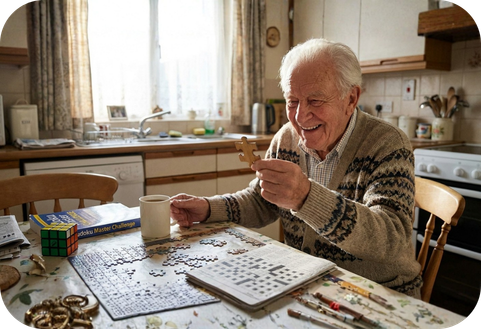
Puzzles are one of the most accessible and effective ways to keep the brain sharp. Puzzles and brain games stimulate memory, attention, and reasoning by challenging the brain to recognize patterns and solve problems. Regular activities such as crosswords, Sudoku, and jigsaw puzzles are linked to slower cognitive decline and better mental agility in older adults (www.heart.org).
Engaging in puzzles challenges memory, reasoning, and pattern recognition. A large study published that older adults who regularly played word and number games experienced cognitive function equivalent to people 10 years younger in certain areas of memory (ScienceDaily). Rotate puzzle types to stimulate different parts of the brain rather than sticking to just one.
Learning new skills stimulates neuroplasticity by encouraging the brain to form new neural connections. Activities such as learning a language, playing a musical instrument, or acquiring digital skills have been shown to improve memory, attention, and cognitive resilience in older adults, potentially lowering dementia risk (Taylor & Francis Online).
Research from the Journal of Cognitive Neuroscience shows that seniors who learned new skills experienced significant improvements in memory and attention compared to those who engaged only in familiar activities (Association for Psychological Science). The key is challenge activities should be engaging but not frustrating.
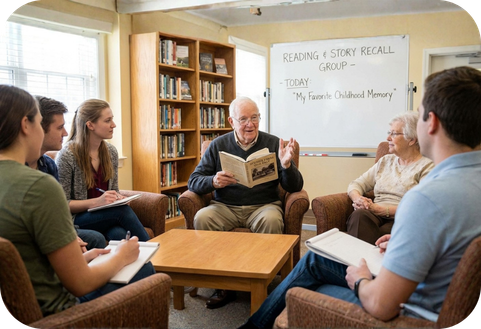
Reading and recalling stories activate language, comprehension, and memory centers of the brain. Regular reading, followed by summarizing or discussing content, helps maintain cognitive function and delays memory decline in seniors by keeping the brain mentally engaged and stimulated (Ace Alzheimer Center Barcelona).
According to the Alzheimer’s Association, frequent reading helps delay the onset of memory loss by keeping language and comprehension centers active (Alzheimer’s Research UK).

Combining physical movement with mental focus such as dancing, tai chi, or coordinated exercises enhances blood flow to the brain and strengthens memory-related regions. Research shows that this dual engagement significantly improves cognitive performance and reduces the risk of age-related memory decline in older adults (ScienceDirect.com).
A study in Neurology found that seniors who combined physical and mental activities had a 35% lower risk of cognitive decline than inactive individuals (National Institutes of Health).
Social interaction and group activities stimulate memory, communication, and emotional processing while reducing loneliness, a known risk factor for dementia. Participating in group discussions, board games, or community activities helps seniors maintain cognitive resilience and slows memory decline by keeping the brain socially and mentally active (National Institutes of Health).
Loneliness has been identified as a significant risk factor for dementia (National Institute on Aging). Regular social interaction helps counter depression, which is also linked to accelerated cognitive decline.
Memory training techniques strengthen recall and attention by teaching the brain structured ways to process and store information. Methods such as mnemonic devices, visualization, repetition, and chunking have been shown to improve everyday memory performance and cognitive confidence in older adults, supporting long-term brain health and functional independence (National Institutes of Health).
Clinical trials show that structured memory training programs can improve daily functioning and confidence in older adults (PNAS).

Mindfulness and meditation improve memory and attention by reducing stress, which negatively affects brain health. Regular practice enhances focus, emotional regulation, and gray matter density in brain regions associated with learning and memory, helping seniors slow cognitive decline and maintain mental clarity as they age (Frontiers).
A study in Psychiatry Research found that seniors who practiced mindfulness meditation showed improved memory and increased gray matter density in areas associated with learning (National Institutes of Health).

ReComune plays a vital role in supporting individuals with Alzheimer’s at different stages by addressing one of the biggest risk factors loneliness. ReComune works to end loneliness by creating opportunities for meaningful connection and regular social interaction. Through ReComune Call, seniors can talk to someone anytime, reducing feelings of isolation, anxiety, and confusion.
The ReComune AI Companion offers friendly conversation, reminders, and emotional support, helping seniors feel heard and connected, especially when human interaction is limited. In early stages, this supports cognitive engagement; in later stages, it provides comfort, familiarity, and reassurance, improving emotional well-being and overall quality of life. Technology like ReComune does not replace human connection it enhances it, making memory-boosting though calls more accessible and consistent for seniors.
Consistent daily habits play a vital role in preserving memory and cognitive function. Practices such as journaling, maintaining regular sleep schedules, healthy nutrition, and limiting multitasking support brain health. Research shows that combining positive lifestyle habits with mental stimulation significantly reduces the risk of cognitive decline and dementia in older adults (National Institutes of Health).
Lifestyle studies show that combining mental exercises with healthy routines provides the strongest protection against Alzheimer’s disease (ScienceDirect.com).
Maintaining memory and cognitive health in later life requires a proactive and holistic approach. While aging naturally brings changes to the brain, regular mental stimulation, physical activity, social engagement, and mindful daily habits can significantly slow cognitive decline. Memory exercises such as puzzles, learning new skills, reading, and mindfulness practices help strengthen neural connections and build cognitive resilience. Equally important is staying socially connected and emotionally supported, as isolation and chronic stress are known contributors to memory loss.
Advances in technology like ReComune makes these protective activities more accessible, allowing seniors to engage consistently and meaningfully. By adopting these evidence-based strategies and making brain health a daily priority, older adults can enhance their quality of life, preserve independence, and reduce the risk of Alzheimer’s disease. The earlier and more consistently these habits are practiced, the greater their long term benefits for cognitive well-being.