Peace of Mind, One Call at a Time: How Daily Check-Ins Strengthen Senior Health and Happiness
A quiet phone call might seem simple but for millions of older adults, that familiar ring can mean the world. In today’s fast-moving, tech-driven society, many seniors face a deep and growing challenge- loneliness and disconnection. Yet, something as small as a daily check-in call can create profound peace of mind, restore a sense of belonging, and even protect physical and mental health.
As families juggle busy schedules, aging parents are often left in isolation, leading to emotional and health risks. But daily communication whether through a short call, video chat, or AI-assisted check-in can transform emotional wellness for older adults.
The Silent Epidemic: Senior Loneliness as a Health Crisis
The U.S. Surgeon General’s 2023 report on social connection and community labeled loneliness a public health epidemic, linking chronic isolation to serious medical consequences. According to the report, lacking social connection carries health risks equivalent to smoking up to 15 cigarettes a day (Fishers Health Department). For seniors, the statistics are even more concerning:
1 in 3 adults over 60 report feeling lonely regularly.
Social isolation increases the risk of dementia by 50%, heart disease by 29%, and stroke by 32%.
These findings make one thing clear that connection isn’t optional it’s essential for healthy aging. Connection is as essential to health as food, water, or shelter. Daily check-in calls are more than conversations they’re a lifeline that bridges emotional distance and restores a sense of care and safety.
Why a Daily Call Can Make All the Difference
Even short, predictable check-ins provide structure and reassurance. Research from Harvard Health Publishing (2023) shows that having consistent social contact improves emotional stability and helps regulate the brain’s stress response. Routine communication boosts dopamine and oxytocin, the “feel good” hormones associated with trust and connection (Harvard Health).
When seniors know that someone will call every day whether it’s a family member, caregiver, or digital companion they experience:
Less anxiety and depression.
Increased sense of security and routine.
Improved sleep and cognitive clarity.
Higher motivation to engage socially.
Even a five-minute call can break the silence of a long day, rekindling warmth, laughter, and belonging.
The Psychology of Reassurance: How Routine Builds Stability
Predictability gives comfort. For seniors, knowing that someone will check in daily provides a feeling of psychological safety the sense that one is cared for, protected, and not forgotten. A study in the Journal of Aging Studies (2022) found that older adults who maintained consistent communication routines reported higher life satisfaction and lower depressive symptoms than those with irregular contact (National Institutes of Health). Routine check-ins create emotional rhythm in daily life. Whether it’s a “Good morning, Mom” or “How was your day, Grandpa?”, these rituals restore meaning and remind seniors they’re valued. Even short, predictable interactions provide emotional grounding they remind us we matter.
The Cognitive Benefits: Keeping the Mind Sharp
Just like physical exercise strengthens the body, conversation serves as a vital workout for the brain. Regular, meaningful communication activates multiple areas of the mind responsible for memory recall, attention span, and verbal reasoning, keeping it sharp and engaged.
Each daily chat whether reminiscing about childhood, talking about current events, or simply sharing how the day went helps stimulate the brain’s language and emotional centers, improving mental flexibility and clarity. According to a 2023study from the University of Michigan, engaging in just 10 minutes of quality social interaction per day can sharpen cognitive performance and reduce the risk of cognitive decline by up to 25% (University of Michigan, 2023).
Social engagement also contributes to neuroplasticity, the brain’s ability to adapt and form new neural pathways, which is critical for slowing age-related decline. Over time, these regular conversations act as mini cognitive exercises helping seniors recall details, process emotions, and stay linguistically fluent.
As confirmed by the National Institute on Aging (2023), consistent social connection helps older adults maintain mental acuity, emotional balance, and even delay symptoms of dementia (NIA, 2023). In essence, a single conversation a day is more than just talk it’s a powerful tool for preserving memory, strengthening focus, and nurturing the agingmind.
Technology as a Bridge, Not a Barrier
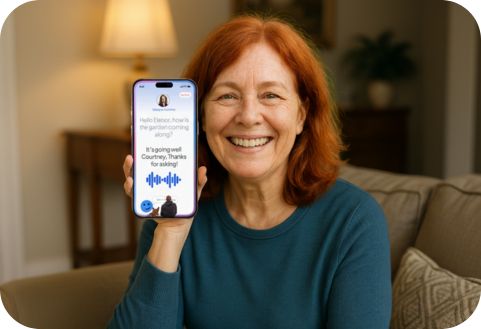
In today’s world, technology isn’t just about innovation it’s about connection. For seniors, the right tools can transform feelings of isolation into moments of joy and belonging. Rather than creating distance, modern AI companions and digital platforms are now serving as bridges that bring families closer, no matter where they live.
Platforms like ReComune, ElliQ, and Character.AI are leading this compassionate tech movement. These tools are designed specifically with older adults’ accessibility and comfort in mind, ensuring that technology feels human, intuitive, and emotionally supportive rather than intimidating.
Their thoughtful design features include:
Everyday Meaningful Conversations– ReComune provides an AI companion that talks like a friend, not just a machine. It engages in friendly daily chats, listens (via text or voice) and responds with warmth and relevance. The app describes itself as empowering seniors to overcome loneliness and isolation through meaningful conversations.
Emotional & Cognitive Support– ReComune emphasises emotional wellbeing and cognitive health. According to its site, meaningful conversations help with memory, reduce stress, and keep mental pathways active.
Customised & Senior-Friendly Experience– A key function is tailoring itself to seniors’ needs: simple, intuitive interface, predictable pattern of engagement, and adapting to the user’s pace.
According to a 2024 study by BMC Geriatrics, older adults using AI-based or video communication tools experienced a 30% increase in perceived social support and a 25% reduction in loneliness symptoms after consistent use (BMC Geriatrics, 2024). By blending empathy with innovation, these digital companions create warmth where silence once lingered. Technology, when used thoughtfully, doesn’t replace human connection it extendsempowering seniors to feel seen, heard, and valued every single day.
The Family Perspective: Peace of Mind for Loved Ones
Daily check-ins don’t just comfort seniors they also give peace of mind to families. Knowing your loved one answered a call, took medication, or simply smiled that day reduces stress and guilt. These features transform reactive care into proactive connection. It’s not just about checking in; it’s about staying emotionally aware and present. With smart calling technology and compassionate design, families can stay close even across cities or continents.
Emotional Healing Through Small Acts of Care
Loneliness in aging isn’t solved by grand gestures it’s eased through small, consistent acts of empathy. A Frontiers in Psychology2022 study found that older adults who received empathetic calls reported a significant reduction in emotional loneliness and improvement in mood (American Medical Association). Simple human connection laughter, warmth, attention nurtures the heart. It’s not about the length of the call, but the authenticity of the care.
Building a Culture of Connection for Seniors
We live in an era where connection is only a button away yet so many older adults still feel disconnected. Families, communities, and healthcare providers can work together to build a culture of consistent communication.
Here’s how to start:
Schedule daily or weekly calls. Even brief chats make a difference.
Rotate callers. Involve children, grandchildren, and friends to keep variety.
Add tech support. Use smart devices or apps for reminders and check-ins.
Create rituals. Morning coffee calls, weekend chats, or story time hours.
Encourage openness. Let seniors express feelings joy or loneliness without judgment.
Routine communication helps older adults maintain emotional balance and self-worth both critical for healthy aging.
Conclusion
Every ring, every hello, every “I was thinking of you” carries quiet healing power. Daily check-ins protect both mental and physical health, reminding seniors they’re loved and valued. Loneliness is not just emotional it’s biological. But connection, in any form, is medicine. Whether it’s through a family member, caregiver, or AI companion like ReComune each call is a small act of care that builds emotional safety. A call a day keeps loneliness away and adds years to life. In the words of the Surgeon General, “Human connection is healing.” And with modern tools, it’s never been easier to make that connection happen one call at a time.