
Recent Comments
Posted by recomune_dhfskm in Awareness, blog on February 20th, 2025

In today’s fast-evolving and emotionally connected digital world, Artificial Intelligence (AI) is no longer confined to sterile tech companies or hidden research labs it has gracefully entered homes, hospitals, and vibrant senior living communities. Among its most inspiring and transformative breakthroughs is the creation of AI companions intelligent, caring, and empathetic digital entities designed to engage, comfort, uplift, and assist seniors in their everyday lives. As the global aging population expands at an unprecedented pace, AI companions are emerging as powerful, life-enhancing allies rather than futuristic novelties.
They bring hope, joy, and reassurance to millions of older adults, acting as trusted friends who enrich emotional well-being, sharpen cognitive abilities, and promote physical vitality. According to the World Health Organization (WHO), the number of people aged 60 and above will skyrocket to over 2.1 billion by 2050 a figure that speaks volumes about our collective responsibility to care for this growing generation. As the elderly population grows, challenges such as loneliness, emotional distress, depression, and cognitive decline have become more urgent and heart-wrenching.
AI companions are intelligent digital or robotic assistants powered by machine learning, natural language processing (NLP), and emotion recognition technologies. Unlike typical smart devices, these systems are designed to build ongoing relationships with their users. They can:
Examples include robotic pets like Joy for All Companion Pets, voice assistants such as Amazon Alexa or Google Assistant, and more advanced AI-driven platforms like ElliQ, Replika, and ReComune all designed to bring comfort, engagement, and connectivity to seniors.
Loneliness among seniors has become a silent epidemic. Studies by the (National Institute on Aging) indicate that one in three seniors experiences social isolation, which can increase the risk of dementia by 50% and premature death by 26%. These numbers underscore the urgent need for innovative solutions that go beyond traditional caregiving. AI companions offer a unique advantage they provide constant availability, personalized engagement, and emotional consistency, all of which are crucial to maintaining a senior’s sense of purpose and connection.
The science behind AI companionship combines artificial intelligence, emotional analytics, and behavioral psychology to develop empathetic systems that understand feelings, simulate human connection, and enhance seniors’ emotional, cognitive, and social well-being.
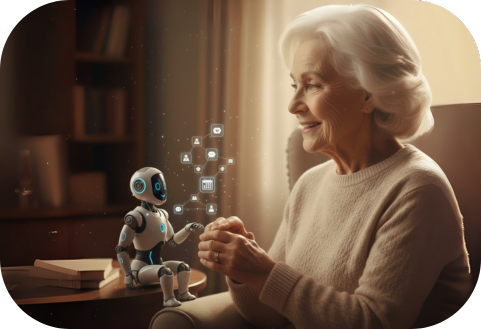
Modern AI companions utilize emotion recognition algorithms that analyze speech tone, facial expressions, and behavioral patterns to respond empathetically. This means they can detect sadness, joy, or frustration and tailor their responses accordingly. According to a 2022 study by the, seniors who interacted with AI companions for six weeks showed a 35% reduction in feelings of loneliness and an 18% improvement in mood consistency (National Institutes of Health (NIH). These digital friends don’t just respond they remember. Machine learning allows AI systems to adapt to each user’s personality and habits, making interactions feel personal and authentic.
AI companions can also help combat cognitive decline. Through games, quizzes, storytelling, and conversational prompts, they stimulate brain activity and encourage memory recall. A study published in the Journal of Aging and Mental Health found that seniors who used AI-based memory games for 30 minutes a day experienced a 12% improvement in short-term memory and a 22% improvement in cognitive focus (National Institute on Aging).

In addition to emotional and mental support, AI companions promote physical well-being. Many integrate with wearable health devices to monitor vitals such as heart rate, blood pressure, and sleep patterns. They can alert caregivers in case of irregularities and remind users to stay hydrated, take medication, or perform light exercises.
AI companions bring a wave of comfort, empathy, and reassurance into the lives of seniors, transforming loneliness into connection and silence into joyful engagement. These intelligent partners offer warmth, compassion, and understanding, creating a safe emotional space where seniors feel heard, valued, and cherished. By fostering trust, confidence, and positivity, AI companions encourage older adults to embrace each day with renewed hope, vitality, and purpose. Their presence not only nurtures emotional resilience and happiness but also reminds seniors that aging can be a journey filled with love, laughter, and meaningful companionship.
One of the most profound benefits of AI companions is their ability to mitigate loneliness. They offer daily conversation, listen attentively, and respond with warmth. While not a replacement for human interaction, AI companions help bridge the emotional gap between family visits and daily solitude. According to (AARP 2021), seniors using AI social robots reported a 45% decrease in self-reported loneliness.
Through motivational messages and uplifting interactions, AI companions can boost morale. They can help seniors start their day with affirmations, remind them of their achievements, and encourage gratitude practices. Emotional words like “You are doing great today” or “Let’s enjoy this beautiful morning together” can have a measurable impact on mood.
Unlike human relationships that may be affected by judgment or misunderstanding, AI companions offer unconditional acceptance. Seniors can express emotions freely without fear of criticism. This psychological safety encourages open communication, promoting mental resilience and self-esteem.
AI companions are evolving beyond generic voice assistants. With the help of machine learning algorithms, they now learn from past interactions to build familiarity and emotional continuity. For example, ElliQ AI companion developed by Intuition Robotics, tailors conversations based on the user’s previous activities, preferences, and emotional tone. ReComune AI Companions is a genuine sense of companionship, recalling previous conversation with real sense of moral support in positive and supporting suggestions. The AI might recall, “You mentioned enjoying gardening last week. How are your roses doing today?” a small but deeply human touch that reinforces connection.
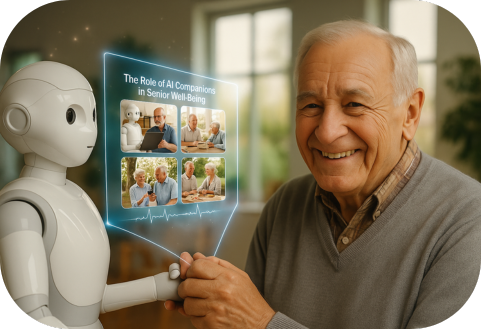
ElliQ is a conversational robot designed specifically for seniors. It uses voice, gestures, and touch to interact naturally. Studies show that seniors using ElliQ for six months experienced a 25% increase in social engagement and a 17% improvement in daily motivation (Intuition Robotics, 2023).
ReComune is an AI-powered platform designed to connect seniors with AI Companion anytime from anywhere for a positive and productive conversation to end seniors loneliness. ReComune – AI Companionship bridges the gap offering seniors trusted, on-demand conversation, empathy, and emotional support that helps them feel connected. It encourages intergenerational bonding and has been shown to reduce loneliness levels by 40% among users.
For seniors who may not feel comfortable with human-like AI, robotic pets such as the Joy for All Cat and Dog offer soothing companionship through gentle touch and lifelike responsiveness. These adorable, low-maintenance companions deliver the emotional comfort of a pet without the responsibility. According to a 2021 University of Exeter study, such AI-powered pets reduced anxiety by 33% and enhanced mood stability among older adults, fostering calm and happiness (University of Exeter Study).
While AI companions bring numerous benefits, ethical concerns must be addressed:
Solutions include implementing transparent AI ethics policies, ensuring affordable access, and designing user-friendly interfaces tailored to seniors’ needs.
The next decade promises exciting advancements. With improvements in natural language understanding, emotion AI, and robotic design, AI companions will become even more lifelike and emotionally intelligent. Researchers predict that future AI companions will be able to detect subtle emotional cues such as stress through voice modulation or micro-expressions, responding with empathy-driven dialogue. Additionally, the integration of virtual reality (VR) and augmented reality (AR) could allow seniors to interact with their AI companions in immersive environments joining virtual gardens, concerts, or family events (PureLogics).
AI companions don’t replace human love, they enhance and celebrate it. These compassionate technologies bring warmth, structure, and hope to seniors, transforming aging into a journey of connection, joy, and purpose. Beyond simple assistance, AI companions empower older adults to live independently, embrace emotional vitality, and rediscover everyday beauty. More than digital tools, they serve as beacons of comfort, confidence, and courage for a generation deserving of care and respect. As technology evolves, the partnership between humans and AI deepens, creating bridges of compassion that guide seniors from isolation to inclusion, loneliness to laughter, and aging to thriving.
Posted by recomune_dhfskm in Awareness, blog on January 14th, 2025

In today’s hyper-connected world, loneliness remains one of the most significant challenges facing seniors. According to the National Institute on Aging, nearly one in four adults aged 65 and older are socially isolated. Another study by the AARP Foundation reported that 35% of adults over 45 feel lonely regularly (AARP Foundation, 2020). These staggering numbers highlight how widespread the issue of loneliness is. But here’s the question: can technology help seniors feel less alone? The answer is a resounding yes when used thoughtfully, technology can bridge gaps, foster connection, and empower seniors to lead more fulfilling lives.
As people age, life circumstances often change. Retirement reduces daily social interaction, friends and spouses may pass away, adult children may move to other cities, and mobility limitations can make it harder to engage with the outside world. These factors often contribute to loneliness and even depression. Loneliness isn’t just an emotional issue. Studies show it increases the risk of chronic illness, cognitive decline, and even premature death. Research has revealed that loneliness can increase the risk of dementia by up to 50% and raise the likelihood of heart disease by 29% (Heart.org). That’s why finding solutions to combat loneliness in seniors isn’t just a matter of comfort it’s a matter of health.

Technology is often portrayed as isolating, especially for younger generations glued to their screens. But for seniors, technology can serve as a lifeline. From smartphones to virtual reality, innovations are opening doors that were once locked shut.
Nothing replaces the joy of seeing a loved one’s face. Video calling platforms like Zoom, FaceTime, and WhatsApp have revolutionized communication. According to Pew Research Center, 75% of seniors who own smartphones use video chat services at least once a week (Pew Research Center, 2021). A daily or weekly video call can give seniors something to look forward to, creating stronger emotional bonds.
While not every senior embraces social media, platforms like Facebook offer a way to stay updated on family milestones, community news, and even local events. In fact, 45% of adults over 65 use Facebook, making it the most popular platform for older adults (Pew Research Center, 2021). Seniors can share photos, comment on posts, and feel more engaged with the lives of their loved ones. This sense of participation reduces feelings of being left out.
From book clubs on Goodreads to support groups on Reddit, seniors can find like-minded communities online. These digital spaces allow them to share stories, exchange advice, and develop meaningful friendships without leaving home.
Devices like Amazon Alexa and Google Assistant aren’t just convenient they provide companionship. According to research by Voicebot.ai, 20% of U.S. seniors use voice assistants daily, finding them helpful for reminders, entertainment, and even casual conversations (Voicebot.ai, 2022). These small interactions can reduce feelings of silence and loneliness.

While technology has incredible potential, there are barriers to adoption among seniors.
Not every senior has access to devices or reliable internet. According to Pew Research Center, 27% of seniors do not have home broadband, limiting their ability to connect online (Pew Research Center, 2021). Programs that provide affordable tablets, smartphones, or internet connections can make a huge difference.
Complex devices can discourage seniors. That’s why senior-friendly devices with larger screens, simple interfaces, and voice commands are essential.
Seniors may feel intimidated by new technology. Family members, community centers, and nonprofits can provide workshops and ongoing support. Peer-to-peer learning groups can also empower seniors to learn together.

Family plays a vital role in making technology meaningful. Here’s how you can help:
When seniors use technology effectively, the emotional impact is profound:
The digital revolution is often criticized for creating distance between people. But for seniors, technology can close the gap. Whether it’s a video call that brightens the day, a virtual trip across the world, or a voice assistant that provides companionship, technology has the power to help seniors feel less alone. Seniors should know about AI Companions which porvides instant, trusted conversation, empathy, and emotional support, ensuring seniors feel connected and always talk in a positive way like ReComune. Loneliness is not inevitable in old age. With compassion, creativity, and the right tools, we can create a future where every senior feels connected, valued, and supported. If we embrace technology not as a replacement but as a supplement to human connection, seniors can live longer, happier, and less lonely lives.
Posted by recomune_dhfskm in Awareness, blog on December 5th, 2024

As children, we often worry about our aging parents about their health, finances, and happiness. One of the less obvious but deeply felt challenges seniors face is social isolation and loneliness. Over time, loss of mobility, shrinking social circles, changes in routine, or health challenges can leave your parent feeling cut off from the world, even if they’re not physically alone.
The good news: there are things you can do, even from a distance, to help them feel more connected, supported, and valued. In this post, I share 10 simple and practical ways to help your aging parent feel less isolated, grounded in both empathy and research.
Social isolation” refers to having few social contacts (an objective measure), while “loneliness” is the feeling of being disconnected (a subjective experience). Both are serious issues, with the WHO noting that about 1 in 4 older adults experience social isolation, and nearly 28% report loneliness in high-income countries (WHO, 2021 , Fakoya et al., 2020).
It sounds basic, but consistency matters more than grand gestures. Set a schedule — daily call, or every other day text or voice message. But make those interactions meaningful:
Frequent, meaningful contact builds trust, lets them feel remembered, and gives you chances to notice how they’re really doing. Research shows scheduled social contact is one of the most effective ways to reduce loneliness in older adults (JAMA Network Open, 2023).

Being part of a group whether small or large gives purpose, belonging, and routine.
Searched revealed that group-based social activities are often more effective than one-on-one solutions for combating loneliness (Fakoya et al., 2020). Evidence shows tech-based programs can reduce loneliness when paired with proper support (Frontiers in Public Health, 2024).
Encourage your parent to revisit or discover passions: gardening, crafts, music, or reading. Provide tools, resources, or connect them to interest-based clubs. This keeps them engaged and gives you conversation starters.
Family bonds are powerful medicine.
Research shows intergenerational contact strengthens social ties and combats loneliness (ScienceDirect, 2021).

Many older adults resist technology, but when introduced gently, it can be life-changing.
During COVID-19, technology became a lifeline for many older adults, especially those in rural areas who faced even greater barriers to connection (BMC Geriatrics, 2023). Evidence shows tech-based
Small gestures, repeated over time, build emotional closeness:
Isolation often has physical causes: mobility issues, transport, or fear of falling. You can help by:
Consistent social contact even via “befriending” programs can reduce feelings of isolation (BMC Public Health, 2020).
If feasible, pets or plants provide companionship and purpose.
Animal-assisted interventions and even simple plant care can improve mood and reduce loneliness (JAMA Network Open, 2023).

Sometimes the best gift is listening. Many older adults hesitate to admit loneliness, fearing stigma.
The success of interventions often depends on active involvement of the older adult in planning and reflection (Fakoya et al., 2020).
Loneliness is not just “emotional” it can affect physical health, cognition, mood, and mortality (sprc.org). If your parent has chronic health conditions or signs of depression, anxiety, or cognitive decline, get professional help:
By combining personal support and professional help, you provide a layered safety net.
Understanding the stakes can motivate sustained effort. Prolonged loneliness and social isolation in older adults are linked to:
That means what may seem like a “soft” emotional issue is in fact a major public health concern.
| Day | Action | Purpose |
| Monday | 15-minute video call, ask about a memory from youth | Reconnect emotionally |
| Tuesday | Send a photo or short music clip | Micro-moment of joy |
| Wednesday | Help them attend (or log in to) a virtual or local club | Social engagement |
| Thursday | Share a short article or podcast on their interest | Intellectual stimulation & conversation starter |
| Friday | Invite a family member or neighbor to drop by | Face-to-face contact |
| Saturday | Help with transport and plan outing (church, park, café) | Breaks monotony |
| Sunday | Reflective conversation: what small wins or worries did they feel? | Emotional check-in |
Your aging parent doesn’t have to feel forgotten or disconnected. While the challenges of mobility, health, distance, and changing social networks are real, consistent empathy, small acts, and bridging strategies can make a profound difference. By combining regular contact, community engagement, technology as a tool (not a burden), meaningful shared interests, and professional support when needed, you can help your parent reclaim a sense of connection, purpose, and belonging.
Posted by recomune_dhfskm in Awareness, blog on November 3rd, 2024

Loneliness has become one of the silent challenges of our time, and older adults are among the most vulnerable to its effects. While we may believe our aging parents are content in their golden years, the reality is that millions of seniors quietly struggle with isolation behind closed doors. Research shows 1 in 4 older adults experience social isolation, and loneliness can increase the risk of premature death by up to 30% similar to smoking or obesity (JSTOR).
The U.S. Surgeon General also warns that chronic loneliness can be as damaging to health as smoking 15 cigarettes a day (The Public Broadcasting Service PBS). These numbers aren’t just statistics, they are wake-up calls. This blog will uncover the 5 subtle yet powerful signs that your parents may be feeling lonely, backed by emotional insights, real statistics, and actionable tips to help them feel loved, valued, and connected again.

A sudden withdrawal from social life is one of the clearest signs of loneliness in aging parents. Seniors may stop attending family gatherings or social events, showing how isolation affects their emotional well-being. Recognizing this change early can help families address loneliness in older adults
There is robust evidence that social isolation and loneliness significantly increase risk for premature mortality, and the magnitude of the risk exceeds that of many leading health indicators (American Psychological Association).
Why it matters?
Isolation often becomes a vicious cycle; loneliness leads to withdrawal, which deepens loneliness further.
What you can do?
Small gestures like a surprise lunch or a Sunday phone call can spark joy and break the cycle of isolation.
Nostalgia can be comforting, but if your parents are always reminiscing about the past and rarely talk about current or future plans, it can be a sign of emotional emptiness in the present.

Studies by the National Institute on Aging show that loneliness reduces motivation and goal-setting behavior, making seniors more likely to mentally live in the past rather than engage in the present.
Why it matters?
Excessive nostalgia can reflect emotional withdrawal and lack of meaningful engagement in daily life.
What you can do?
Even asking, “What do you think I should do about this?” can remind them they still matter deeply.
| Mood Change | Common Behaviors in Seniors | Underlying Effects of Loneliness | Research Evidence / Source |
| Irritability | Easily frustrated or annoyed by small issues- Short temper with family/caregivers- Withdrawal after conflicts | Heightened stress response- Lower tolerance for daily hassles | Loneliness increases stress reactivity and hostility in older adults (National Institutes of Health) |
| Sadness / Emotional Flatness | Appears uninterested or emotionally numb- Stops engaging in enjoyable activities- Frequent crying or low energy | Reduced dopamine and serotonin activity- Loss of emotional rewards from social interaction | Loneliness predicts depressive symptoms in older age (ResearchGate) |
| Anxiety / Worry | Expresses fears about safety or health- Constant worrying about family- Sleep disturbances or restlessness | Chronic loneliness triggers cortisol release- Increases vigilance and fear response | Loneliness heightens anxiety and cortisol levels in older adults (ScienceDirect) |
| Mood Swings | Sudden shifts from cheerful to angry or sad- Overreacting emotionally to minor events | Dysregulation of emotional control networks in the brain | National Institute on Aging Loneliness impairs emotional regulation in aging brains (National Institute on Aging) |
| Hopelessness | Negative outlook about future- Talking about “giving up” or feeling “useless” | Loss of perceived purpose or social role | Age UK (2022) Lonely older adults are more prone to feelings of hopelessness and depression (Age UK Report) |
Loneliness isn’t always quiet sometimes, it roars through mood changes.
A study from the Journal of Gerontology revealed that chronic loneliness increases stress hormones like cortisol, which are linked to depression, anxiety, and cognitive decline
Why it matters?
Mood changes are often cries for connection. Older adults might not say “I’m lonely,” but their behavior can reveal what words can’t.
What you can do?
Your calm presence and listening ear might be the emotional lifeline they desperately need.

Loneliness in seniors doesn’t just create emotional pain — it can quietly erode motivation and self-esteem over time. For aging parents, this often shows up in their daily habits and routines. You might notice them losing interest in hobbies they once loved, skipping social activities, or neglecting simple self-care tasks. These subtle signs of loneliness in older adults reveal how deeply isolation can affect mental health and overall well-being, making it important for families and caregivers to pay close attention to changes in everyday behavior
The study found that lonely older adults skip an average of 224 meals per year and that 75% of them are not getting the right amount of at least one element of nutrition (NEWS4SA).
Why it matters?
Poor self-care is both a symptom and consequence of loneliness, and it can quickly spiral into serious health issues.
What you can do?
In today’s digital age, loneliness in seniors can often disguise itself as constant online activity. Aging parents may spend hours on social media or digital devices, seeking connection yet feeling unfulfilled. This hidden sign of loneliness highlights the importance of real, meaningful interactions for older adults.
For example, storytelling clubs in New York City report that 100% of participants feel an improvement in mood, 89% feel supported by fellow members 100% fell sense of community (Life Story Club). Presenting such options shows what’s available while leaving choice and control with them which strengthens their sense of independence.
On average, older adults spent approximately 37% of their waking time (6.4 hr a day) watching television (National Institute of Health).
Why it matters?
While these behaviors may seem harmless, they often mask a deep craving for real human connection.
What you can do?
Loneliness in seniors is more than an emotional struggle, it’s a serious health concern. The good news is, you can make a difference. Small acts of care can greatly improve your aging parents’ well-being and reduce feelings of isolation.
Here are quick ways to start
Strong social connections can provide emotional support, reduce stress, and increase feelings of happiness and belonging, which in turn may have beneficial effects on physical health and promote a longer and healthier life (The World Economic Forum).
Remember Love Is the Cure for Loneliness. If your parents are showing any of these 5 signs of withdrawal, living in the past, mood changes, declining self-care, or clinging to any contact, they may be silently battling loneliness. Don’t wait for them to say, “I’m lonely”. They might never say it. But your love, presence, and effort can rewrite their story. Even a simple “I love you” call can light up their world like sunshine after a long winter. Because at the end of the day, the greatest gift you can give aging parents is not things it’s time.
Posted by recomune_dhfskm in Awareness, blog on October 12th, 2024

Loneliness in seniors is far more dangerous than simple sadness it dramatically raises the risk of heart disease, stroke, dementia, and even premature death (JSTOR). This blog enlightens the cutting-edge science, overlooked warning signs, and practical, evidence-based ways families and caregivers can protect their aging loved ones. Loneliness is dismissed as a harmless emotion something we think can be fixed with a quick call or a passing smile. But for older adults, chronic loneliness is a silent epidemic and a severe public-health crisis that quietly damages the body, erodes the mind, and shortens life expectancy.
Groundbreaking research proves that social disconnection doesn’t just weigh on the spirit; it rewires the brain, weakens the immune system, strains the heart and blood vessels, and accelerates cognitive decline. Experts now compare the health toll of loneliness to smoking 15 cigarettes a day or living with obesity (University of New Hampshire).
Nearly one in three middle-aged and older Americans report feeling lonely, a staggering figure that continues to rise as the U.S. population ages. Without timely intervention, millions more risk suffering not only emotionally but also physically.
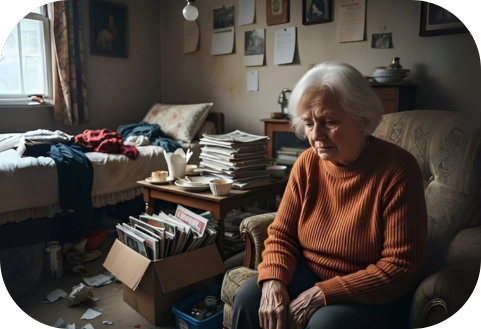
Loneliness is the subjective experience of social disconnection very different from simply living alone. This invisible burden sets off a cascade of biological stress responses cortisol (the stress hormone) surges, blood pressure climbs, inflammation intensifies, and immune defenses weaken. Over time, these shifts accelerate chronic illnesses, frailty, and neurodegenerative decline (National Institutes of Health)
Loneliness is not just emotional discomfort it is a neurological hazard. Prolonged stress elevates cortisol and inflammatory markers, which gradually damage neurons and shrink brain regions tied to memory, focus, and decision-making. Large pooled analyses, including NIA-funded research, confirm that lonely individuals have significantly higher odds of developing dementia even when depression and other factors are accounted for. This makes loneliness an independent risk factor for cognitive decline (National Institute on Aging).
Caregivers should watch for early brain signals:
Recognizing these early and voicing them to a healthcare provider can profoundly change outcomes. In brain health, early detection is transformative.
Loneliness exerts chronic strain on the cardiovascular system. Research links it to high blood pressure, more hospitalizations, poorer heart-failure outcomes, and elevated risk of heart attacks and strokes.
Meta-analyses show:
For seniors with existing heart conditions, loneliness predicts worse survival rates and more frequent emergency visits.
Why this matters: Heart disease and stroke remain the leading causes of death and disability in older adults. Tackling social disconnection is as critical as managing blood pressure or cholesterol.
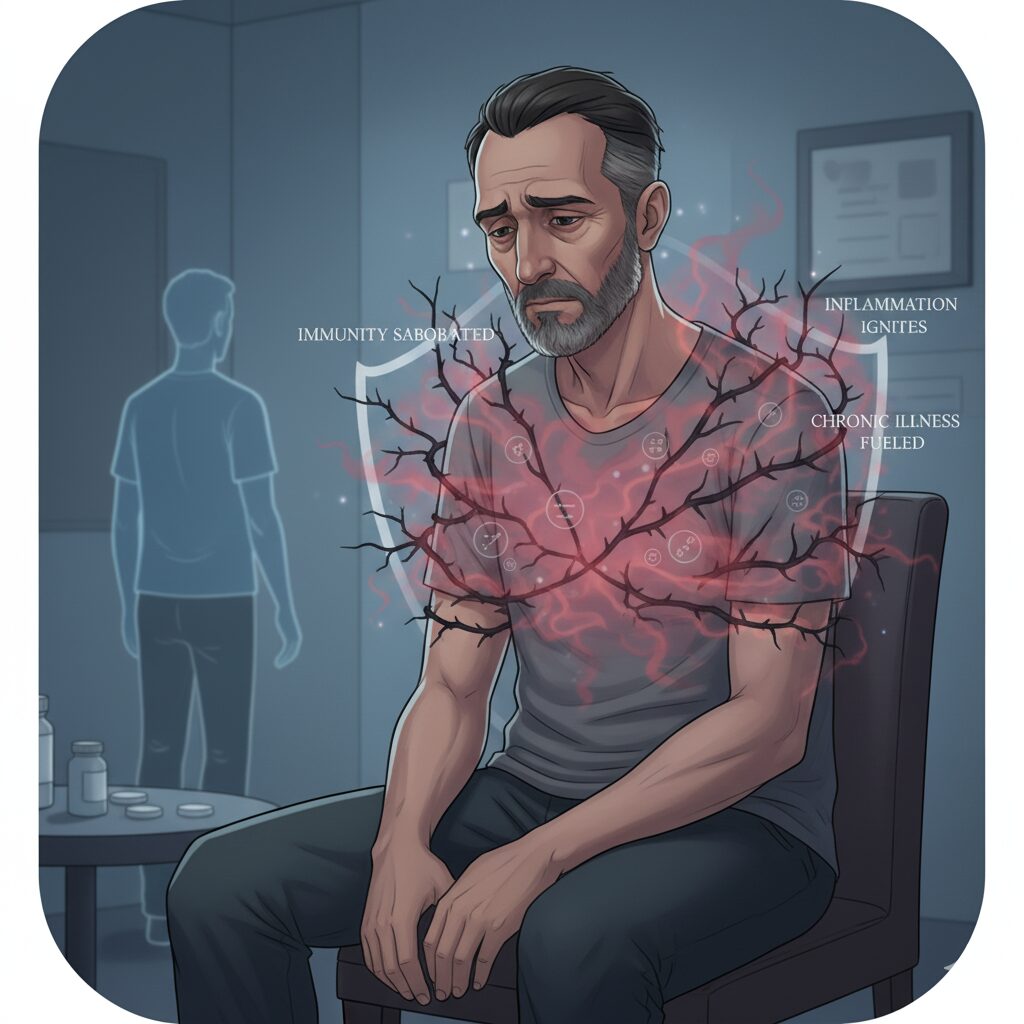
Chronic loneliness does more than hurt feelings it weakens immunity and amplifies systemic inflammation. Studies link it to:
Lonely older adults respond less effectively to vaccines and are more vulnerable to infections. Over time, this cascade magnifies chronic conditions and reduces life expectancy by 3–5 years.
Global data now recognize loneliness as a worldwide public health threat, linked to over 871,000 deaths annually, with effects comparable to heavy smoking (World Health Organization).
While loneliness can strike anyone, some groups of seniors are particularly vulnerable:
Socioeconomic disparities also play a role: seniors with lower incomes report much higher loneliness rates (AARP).

The good news: loneliness is reversible. Even small, consistent steps can improve health outcomes and restore joy. Research shows that meaningful connections lower stress hormones, improve immunity, and strengthen both brain and heart health.
Here are five high-impact strategies families and caregivers can adopt:
Loneliness isn’t solved by random check-ins — it thrives on intentional, heartfelt connections. Instead of quick calls, ask deeper questions: “What made you smile this week?” Studies show that quality matters more than quantity: even weekly 30-minute visits reduce perceived isolation.
For times when loved ones can’t always be present, ReComune AI Companionship bridges the gap offering seniors trusted, on-demand conversation, empathy, and emotional support that helps them feel connected between visits.
Technology can be a powerful lifeline — if it’s simple to use. Set up one-touch video calls, voice assistants, or large-button smartphones so seniors can connect without tech anxiety. Pair this with community-based support, such as local senior centers, faith groups, or volunteer visitors, which have been shown to lower depressive symptoms and social withdrawal in older adults (National Institute of Health).
Feeling needed is one of the strongest buffers against loneliness. Encourage seniors to volunteer, mentor, or even care for a pet. A study published in Aging & Mental Health found that older adults who engaged in purposeful activities reported higher life satisfaction and lower loneliness scores (Aging & Mental Health, 2019). Purpose restores identity, builds natural social contact, and protects mental health.
Often, it’s not unwillingness but practical barriers that keep older adults isolated. Untreated hearing or vision loss can drastically limit social participation, while lack of transportation cuts off access to community life. By addressing sensory health and arranging support such as rideshare services, community shuttles, or volunteer drivers, families can dramatically reopen the door to connection (CCAM-TAC).
Loneliness is not just emotional — it’s clinical. Ask healthcare providers to include loneliness screening during wellness visits, and request referrals to social prescribing programs or counseling services. Since depression and loneliness often overlap, addressing underlying mood disorders can reignite the desire for social contact and reduce health risks (CDC).
Small rituals also matter: sharing a meal, swapping photos, or co-reading a book can create daily micro-moments of belonging that strengthen connection.
Approach conversations with warmth and curiosity. Use “I” statements (“I miss our talks”), normalize the feeling (“Many people struggle with loneliness as they get older”), and offer specific help (“Would you like me to come by Tuesdays?”). Avoid framing loneliness as a character flaw it’s a social condition that needs practical solutions.
If loneliness is paired with persistent sadness, hopelessness, sleep or appetite changes, suicidal thoughts, or rapid cognitive decline, it’s important to contact a healthcare provider promptly. Clinicians can assess for depression, cognitive impairment, and safety risks and connect older adults to community services, mental health care, or social prescribing programs (National Institute on Aging).
Loneliness doesn’t have to be a lifelong affliction it is reversible, and emotional healing is possible at every stage of life. Compelling research demonstrates that cultivating resilient social connections, diminishing chronic isolation, and addressing co-occurring mental or physical conditions can drastically reduce cardiovascular risks, cognitive decline, and overall mortality while elevating vitality, longevity, and happiness. For families and caregivers, even seemingly modest gestures a heartfelt phone call, a consistent weekly visit, or providing reliable transportation function as transformative medicine for the heart, mind, and soul.
Posted by recomune_dhfskm in Awareness, blog on September 20th, 2024

Loneliness among older adults often goes unnoticed, yet its emotional and physical effects can be profound. If you’ve sensed a growing distance, fewer chats, shorter responses, or general quietness, it could signal that your aging parent is feeling lonely. Starting the conversation requires courage, empathy, and respect.
A compassionate chat can offer reassurance, connection, and emotional support. This guide gives you thoughtful, research backed advice to help you initiate and guide such a conversation with care, clarity and with a deeper understanding of its importance.
Loneliness isn’t just an emotional concern — it represents a serious public health issue that can silently erode both mental and physical well-being. While many see loneliness as a passing feeling, research shows it can have profound long-term effects on our bodies, comparable to other well-known health risks like smoking and obesity. It doesn’t just affect mood — it can alter brain function, weaken the immune system, and even shorten lifespan.

Here are some alarming findings from recent studies:
Aim for warmth not formality. A walk in the park, a quiet corner of home, or a shared cup of tea creates an ideal atmosphere for conversation, Comfort and privacy matter.

Begin by reinforcing the relationship, not pointing something out:
Considerate timing and phrasing make a difference
“I” statements focus on your own feelings rather than placing blame, which fosters trust and empathy.
Instead of yes/no prompts, try:
Open-ended questions allow seniors to reflect and express emotions more freely.
After asking, truly listen. Offer affirmations like, “I understand,” or “That sounds hard.” Let pauses be part of the conversation; it shows patience, not pressure. As connection builds in the conversation, you may come to bring up loneliness softly:
This kind of acknowledgment doesn’t label you. You illuminate feelings that might be hard to say but even harder to deny.
If your parent shares their feelings you should validate their experience with words like:
Show that you hear and accept their emotional reality. Validation reduces shame and builds emotional closeness.
Resist Rushing to “Fix”, Instead of shifting to action, invite dialogue:
This keeps the focus on their perspective and empowers them to guide the next steps (Harvard Health Publishing, 2020).
For example, storytelling clubs such as the Life Story Club in New York City report that 95% of participants feel an improvement in mood and social support (Life Story Club, 2022). Presenting such options shows what’s available while leaving choice and control with them which strengthens their sense of independence.
Here’s a clear breakdown of the stakes framed in a way that helps you and your parent view the conversation as proactive, not alarmist:
| Health Issue | Impact Related to Loneliness or Isolation | References |
| Dementia | ~50% higher risk | Johns Hopkins University |
| Heart Disease | 30% increased risk | ScienceDaily |
| Stroke | 32% increased risk; up to 56% if loneliness is chronic | The Guardian |
| Premature Death | Risk increases similar to smoking or obesity | JSTOR |
| Mental Health | Associated with higher rates of depression, anxiety, suicidal ideation, hospitalization | IntechOpen |
Understanding these risks frames the conversation as part of health care not scolding, but compassionate intervention.

Taking action doesn’t mean solving everything at once, it means showing up with consistency, care, and small gestures that rebuild connection. Whether it’s making time for regular check-ins, helping your parents explore social activities, or just sitting together in quiet companionship, these steps matter. Supporting your loved one through loneliness requires patience and presence. Even simple efforts can go a long way in restoring purpose, comfort, and emotional well-being. Create gentle routines: Weekly check-ins via call, message, or letter are simple and consistent.
These gestures fuel emotional safety, choice, and activity without overstepping.
Honest stories from communities often reveal what really resonates:
These reflections remind us that authenticity, memory, and connection often mean far more than grand gestures.
These findings make it clear that loneliness is far more than an emotional struggle — it is a powerful and often hidden risk factor for serious health conditions. From cognitive decline and heart disease to premature death, the toll of social isolation can be as dangerous as smoking or obesity. Recognizing loneliness as a public health issue is the first step toward addressing it.
Alongside building stronger human connections, innovative solutions like AI companions are emerging to offer emotional support, meaningful conversation, and daily engagement for those who feel isolated — especially older adults. By combining technology with community care, we can create a safety net that not only protects mental well-being but also improves the long-term physical health of our most vulnerable populations.
Posted by recomune_dhfskm in Awareness, Infographic on September 15th, 2024
Loneliness isn’t just a feeling—it’s a critical public health issue with severe consequences. This infographic explores the profound impact of social isolation on our physical and mental well-being.
The health risk of prolonged loneliness is comparable to well-known dangers.
15
Cigarettes a Day
Studies have equated the mortality risk of chronic loneliness to smoking 15 cigarettes daily, making it a more significant threat than obesity.
When we feel lonely, our bodies experience stress that can lead to a higher risk of developing serious, chronic conditions.
50%
Increased Risk
32%
Increased Risk
29%
Increased Risk
45%
Increased Risk
38%
Increased Risk
35%
Increased Risk
This visual highlights the percentage increase in risk for major health issues among individuals reporting high levels of loneliness compared to those who do not.
Loneliness is a significant contributor to mental health challenges, creating a cycle that can be difficult to break.
The stress of isolation weakens the body’s defenses and contributes to long-term physical damage.
Social isolation often disrupts healthy routines and behaviors, further compounding health risks.
A significant portion of the global adult population experiences loneliness, making it a widespread issue.
Approximately 1 in 4 adults report feeling lonely, highlighting the pervasive nature of this challenge across societies.
While loneliness can affect anyone, certain age groups report higher levels of frequent social isolation.
Younger adults and the very elderly are often the most vulnerable, though loneliness remains a significant issue throughout the lifespan.
Breaking the cycle of loneliness is a journey. Taking small, intentional steps can rebuild social connections and improve overall health.
Recognize the feeling and reach out to one person you trust—a friend, family member, or colleague.
Join a class, club, or group centered around an interest. Shared activities are a natural way to connect.
Helping others can provide a strong sense of purpose and community, reducing feelings of isolation.
You are not alone in feeling lonely.If you are struggling, consider reaching out to a mental health professional, a support hotline or ReComune. Connection is possible.(Source: CDC / Surgeon General Report, 2023, National Institute on Aging, WHO, 2022)
Posted by recomune_dhfskm in Awareness, blog on September 10th, 2024

Loneliness is often dismissed as a fleeting emotion—something temporary that fades with time. Yet for millions of seniors across North America, it is far more than just a passing feeling. Loneliness has become a silent epidemic, one that threatens not only emotional well-being but also physical health.
As families grow busy, children move away, and social circles shrink with age, many older adults find themselves living in quiet isolation. This crisis doesn’t capture headlines like other public health issues, but its impact is undeniable. Despite society’s image of aging as a season of wisdom, freedom, and rest, the reality for countless seniors is very different: days marked by disconnection, invisibility, and loss of purpose.
Unlike other health challenges, loneliness isn’t easy to spot. It doesn’t leave scars or physical marks, yet its effects run deep—undermining both body and mind. This is the hidden reality experts now recognize as senior loneliness: a silent but growing epidemic in North America.
In this blog, we’ll explore the scale of the problem, uncover its root causes, examine its impact on senior health, and highlight how families, communities, and technology can work together to create meaningful solutions.
Senior loneliness is far more widespread than many realize. In the United States, the National Academies of Sciences, Engineering, and Medicine report that almost one in four adults over 65 lives in social isolation. The situation in Canada is no less concerning, where nearly 30% of seniors admit to feeling lonely at least once each week. With the senior population growing rapidly, the challenge is only expected to intensify—by 2030, more than one in five North Americans will be over the age of 65.
What makes these numbers especially troubling is that loneliness isn’t simply a matter of emotions; it carries severe health risks. Studies reveal that persistent loneliness can raise the likelihood of premature death by 26%, a risk comparable to obesity or smoking 15 cigarettes a day.
Loneliness in older adults rarely stems from a single source. Instead, it often arises from a mix of life changes and circumstances that gradually build over time.

Loneliness isn’t just an emotional struggle—it’s a serious health hazard. Leading organizations warn that its impact on seniors rivals some of the deadliest chronic conditions.
Cognitive Decline
Lonely seniors are 50% more likely to develop dementia, according to the National Institute on Aging (NIA).
Heart and Stroke Risks
American Heart Association reports that isolation increases the risk of heart disease by 29% and stroke by 32%.
Mental Health Strain
The Social Isolation and Loneliness in Older Adults National Institutes of Aging highlights that prolonged loneliness is strongly tied to depression, anxiety, and higher suicide rates in older adults.
Weakened Immunity
Research from Harvard Health shows that chronic loneliness can alter immune system function, leaving seniors more vulnerable to infections and slower recovery.
Premature Death
A landmark study published in Perspectives on Psychological Science found that social isolation raises the risk of early death by 26%—a danger level comparable to smoking 15 cigarettes daily (Holt-Lunstad et al., 2015). National Institutes of Health (NIH) has since recognized loneliness as a pressing global health concern.
Loneliness isn’t harmless. It silently eats away at both body and mind, shortening lives and eroding well-being.
Loneliness doesn’t always announce itself loudly—it often shows up in subtle ways that can be easy to overlook. Paying attention to these warning signs can make a big difference in supporting your loved ones:
Social Withdrawal: Pulling away from family, friends, or community gatherings they once enjoyed.
Loss of Interest: No longer finding joy in hobbies, activities, or routines that used to bring them happiness.
Changes in Daily Habits: Shifts in appetite, disrupted sleep patterns, or lack of energy.
Emotional Distress: Frequent expressions of sadness, anxiety, or hopelessness.
Cognitive and Self-Care Decline: Increasing forgetfulness, neglecting personal care, or seeming less motivated overall.
Family support is often the strongest shield against senior loneliness. Even small, thoughtful gestures can go a long way in making older adults feel loved, connected, and valued. Here are some meaningful ways families can help:

When designed with simplicity and accessibility in mind, technology can be a lifeline for seniors facing isolation. It has the power to close physical distances, spark conversations, and rebuild a sense of community.
Video Calling Platforms
Apps like Zoom, FaceTime, or WhatsApp make it easier for families to share moments, celebrate milestones, and stay emotionally close—even when miles apart.
Online Learning & Virtual Communities
From book clubs and language classes to hobby-based groups, online platforms give seniors the chance to learn, engage, and connect with others who share their interests.
AI Companions & Smart Assistants
Voice-enabled devices can offer friendly reminders, simple entertainment, and even companionship through interactive conversations.
ReComune: A Powerful Solution for Senior Connection
Among these tools, ReComune stands out as a platform built specifically for seniors. Unlike generic social networks, ReComune is designed to be intuitive, safe, and welcoming. Seniors can:
By embracing solutions like ReComune, families can help their loved ones bridge both physical and emotional distances transforming loneliness into connection, and isolation into community.
Senior loneliness in North America does not have to be the norm. With greater awareness, genuine compassion, and collective action, we can reshape aging into a stage of life defined by connection, purpose, and belonging not isolation.
Families must place emotional connection at the heart of caregiving. Communities need to create welcoming spaces where older adults feel seen, heard, and valued. And technology must continue evolving as a bridge making it easier for seniors to stay close to loved ones and participate fully in society.
Most importantly, seniors themselves deserve to feel empowered, not forgotten. Their stories, wisdom, and presence matter. By working together families, communities, innovators, and seniors we can build a future where no one grows old feeling alone, but instead grows old surrounded by care, dignity, and connection.

Loneliness is far more than a fleeting feeling it is a silent epidemic stealing health, joy, and dignity from millions of seniors. But it doesn’t have to be this way. With compassion and commitment, we can turn isolation into connection and despair into hope.
By opening conversations that matter, strengthening community bonds, and empowering seniors with accessible technology like ReComune, we can ensure that every older adult feels seen, valued, and never left behind.
This is not just about fighting loneliness it’s about honoring the lives and legacies of our aging loved ones. Together, we can break the silence, restore connection, and build a culture where growing old means living fully with dignity, purpose, and care.